
How To Choose Carpet For Your Home
Choosing carpet sounds simple until you are standing in front of a wall of samples, wondering why twelve shades of beige are suddenly making you question your entire life.
The right carpet is not just about colour. It changes how a room feels, how warm it is, how much sound it absorbs, how comfortable it is underfoot, and how well the space copes with real life.
And because carpet is not something you want to replace in a hurry, it is worth choosing properly.
The Quick Answer
The best carpet for your home depends on where it is going, how much traffic the room gets, who lives there, and how you want the room to feel.
Wool is beautiful and natural.
Solution-dyed nylon is practical and durable.
Polyester can be soft and affordable.
Triexta is a good family-friendly synthetic.
Polypropylene is budget-friendly but less resilient.
Wool blends can be a sensible middle ground.
There is no single “best” carpet. There is only the right carpet for the right room.
Start With The Room, Not The Sample
Before you choose a colour, start with the room's function.
A main bedroom has very different needs from a hallway. A guest room does not need to work as hard as stairs. A family room with children, pets, and daily foot traffic needs a different level of durability than a quiet sitting room.
Questions To Ask Yourself
How much foot traffic does this room get?
Is this a shoes-on or shoes-off area?
Are there children or pets?
Is softness more important than durability?
Does the room need to feel warmer, quieter or more luxurious?
Is this a long-term home or a short-term update?
Will the carpet sit beside timber, tiles or existing flooring?
Designer Tip - Don’t select carpet in isolation. Flooring needs to work with the floor plan, the furniture layout, the lighting, the paint colours and the way the home is actually lived in.
Selecting The Right Carpet Fibre
Once you have worked out where the carpet is going, the next decision is fibre.
This is the part that determines how the carpet will actually behave in your home. Two carpets can look almost identical in a showroom, but perform very differently once they are dealing with children, pets, shoes, sunlight, spills, vacuum marks and everyday foot traffic.
Wool, nylon, polyester, polypropylene, triexta and wool blends all have their place. The trick is not to choose the “best” fibre in theory, but the right fibre for the room, the people using it, and how hard it needs to work.
A main bedroom may call for something soft, warm and luxurious. A hallway or stairs may need something more durable and forgiving. A family room might need stain resistance, resilience and easy clean-up before anything else.
So before choosing a colour, start with performance. The right fibre gives you the foundation for comfort, longevity and a carpet that still makes sense once real life has moved in.

Understanding Carpet Fibre Types
Carpet fibre is one of the biggest decisions you will make when choosing carpet for your home. It affects how soft the carpet feels, how well it handles foot traffic, how easy it is to clean, how it responds to pets and spills, and how long it will keep looking good.
This is also where carpet can get confusing, because two samples can look very similar but behave very differently once they are installed. Wool, nylon, polyester, polypropylene, triexta, wool blends, and natural fibres all have different strengths, and none is perfect for every room.
The aim is not to find the one “best” carpet fibre. The aim is to match the fibre to the room, the people who use it, and the level of wear it needs to withstand. Bedrooms, stairs, family rooms and guest rooms all ask different things from a carpet, so the right choice depends on how you actually live.
Wool Carpet
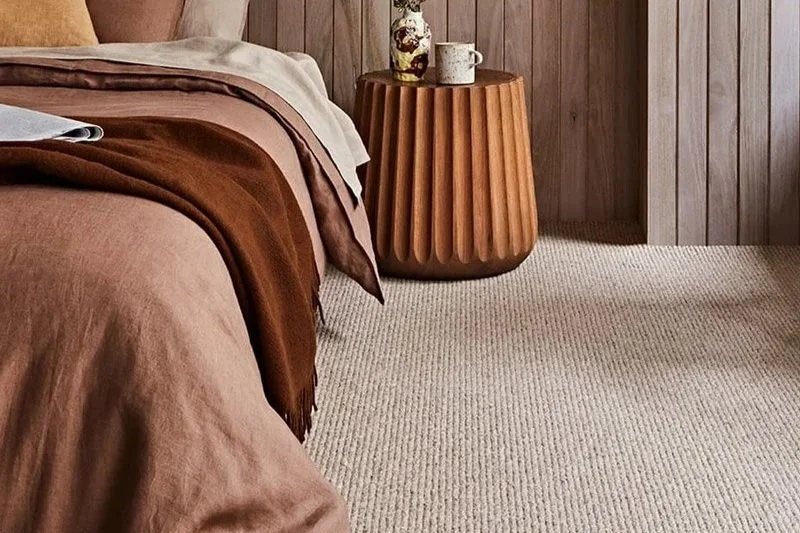
Wool is the classic natural carpet fibre, loved for its softness, warmth and beautiful depth of colour. It has a more luxurious feel underfoot and can help a room feel quieter, calmer and more settled. Wool is usually best suited to bedrooms, living rooms, and homes where comfort and quality are a priority, but it comes at a higher price point and requires proper care.
Solution Dyed Nylon Carpet
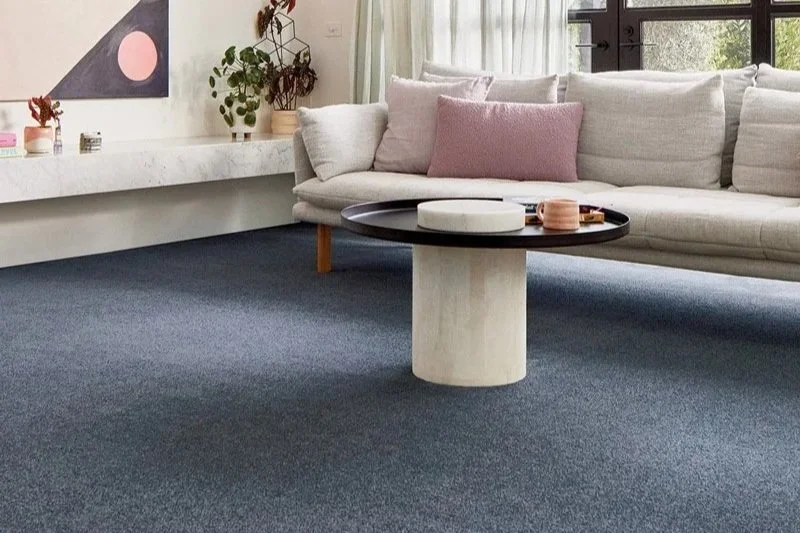
Solution-dyed nylon is one of the most practical choices for busy homes. Because the colour is built into the fibre during manufacturing, it tends to be more colourfast and stain-resistant than standard dyed options. It is a strong choice for stairs, hallways, children’s rooms and family spaces where durability matters more than a luxury natural feel.
Standard Nylon Carpet
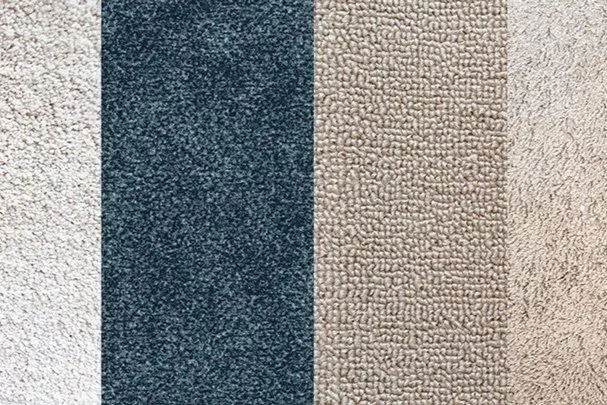
Standard nylon is a durable synthetic fibre widely used in residential carpets. It is known for its resilience, meaning it can withstand heavy foot traffic and everyday use. A good nylon carpet can be a reliable all-rounder, but performance varies depending on the quality of the fibre, construction and stain treatment.
Polyester / PET Carpet
Polyester carpet is often chosen for its softness, colour clarity and more accessible price point. It can be a good option for bedrooms, guest rooms and lower-traffic areas where comfort matters, but heavy wear is less of a concern. The main trade-off is that polyester can flatten faster than wool or nylon, so it is not always the best choice for stairs or busy family zones.
Polypropylene / Olefin Carpet
Polypropylene, also known as olefin, is often chosen for its affordability and stain resistance. It can work in budget-driven projects or lower-traffic rooms, but it is generally less resilient than wool, nylon or triexta. In busy areas, it can crush, flatten or show wear more quickly, so it is best used with realistic expectations.
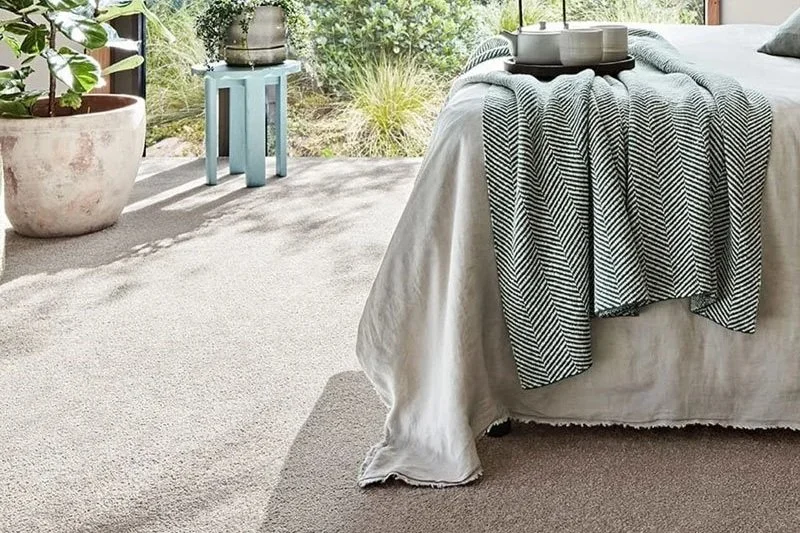
Triexta Carpet
Triexta is a newer synthetic fibre known for softness and strong stain resistance. It can be a good option for family homes, children, and pets, particularly where you want something practical yet comfortable underfoot. It is generally more resilient than standard polyester, although quality still varies by product, pile style and construction.
Wool Blend Carpet
Wool blend carpet combines wool with synthetic fibres, often nylon, to balance softness, warmth and durability. It can be a sensible middle ground if you like the natural feel of wool but need a little more practicality for everyday use. The exact blend matters, so it is worth checking the percentage breakdown rather than assuming all wool blends perform the same way.
Natural Fibre Flooring
Natural fibres such as sisal, seagrass and jute bring beautiful texture and a relaxed, organic look. They are often used as rugs or in feature areas rather than as soft whole-home carpet. While they can add warmth and character, they are generally firmer underfoot and less forgiving with spills, so they need to be chosen with care.
Cut Pile Or Loop Pile?
Fibre is only part of the decision. The pile style matters too.
Cut-pile
Cut-pile - Cut-pile means the carpet loops have been cut, leaving the fibres upright. It usually feels softer underfoot than loop pile, but different cut-pile styles behave quite differently.
Saxony - Saxony has a dense, upright pile with a soft, classic look. It suits bedrooms and sitting rooms, but can show tracking and footprints depending on the fibre, colour and pile height.
Plush / Velvet - Plush carpet has a smooth, soft and more formal finish, often with a velvety appearance. It works well in bedrooms, formal living rooms and lower-traffic spaces. The main downside is that it can show footprints, vacuum marks and shading more easily.
Frieze - Frieze has longer, tightly twisted fibres with a more relaxed, textured finish. It can work well in casual living rooms, bedrooms and busier homes where you want softness without a perfectly smooth look. The texture is part of the appeal, so it feels less formal than plush or Saxony.
Shag / Long Pile - Shag or long pile carpet has longer, looser fibres and a soft, cosy feel. It is best kept to low-traffic bedrooms, rugs or decorative areas. It can be harder to vacuum, may flatten over time, and is not always ideal for people with allergies or for heavy use.
Twist - Twist carpet has fibres twisted in different directions, giving it a slightly textured finish. It is one of the most practical all-rounders, working well in family rooms, bedrooms, hallways, and other living areas. It is less sleek than plush, but much more forgiving. For most real homes, especially with children, pets, or busy rooms, cut-pile twist is usually a safer starting point than plush. Plush is beautiful, but it does like to tell everyone exactly where you walked.
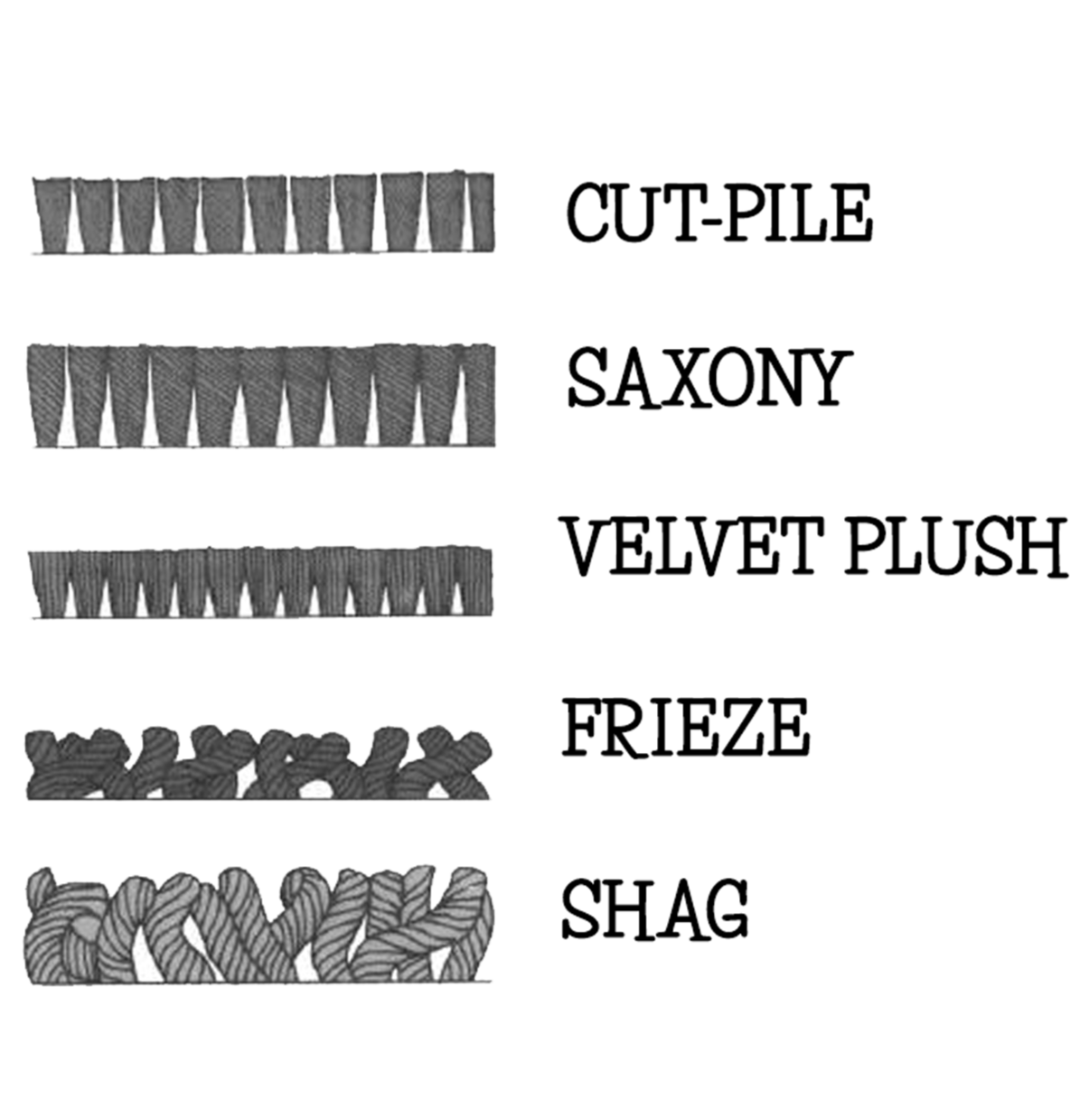
The simple version: Plush is the most elegant but the least forgiving. Twist is the most practical all-rounder. Saxony sits somewhere between Plush and Twist. Frieze is more relaxed and textured. Shag is soft but higher maintenance. Cut and Loop adds pattern and texture.
Loop-pile
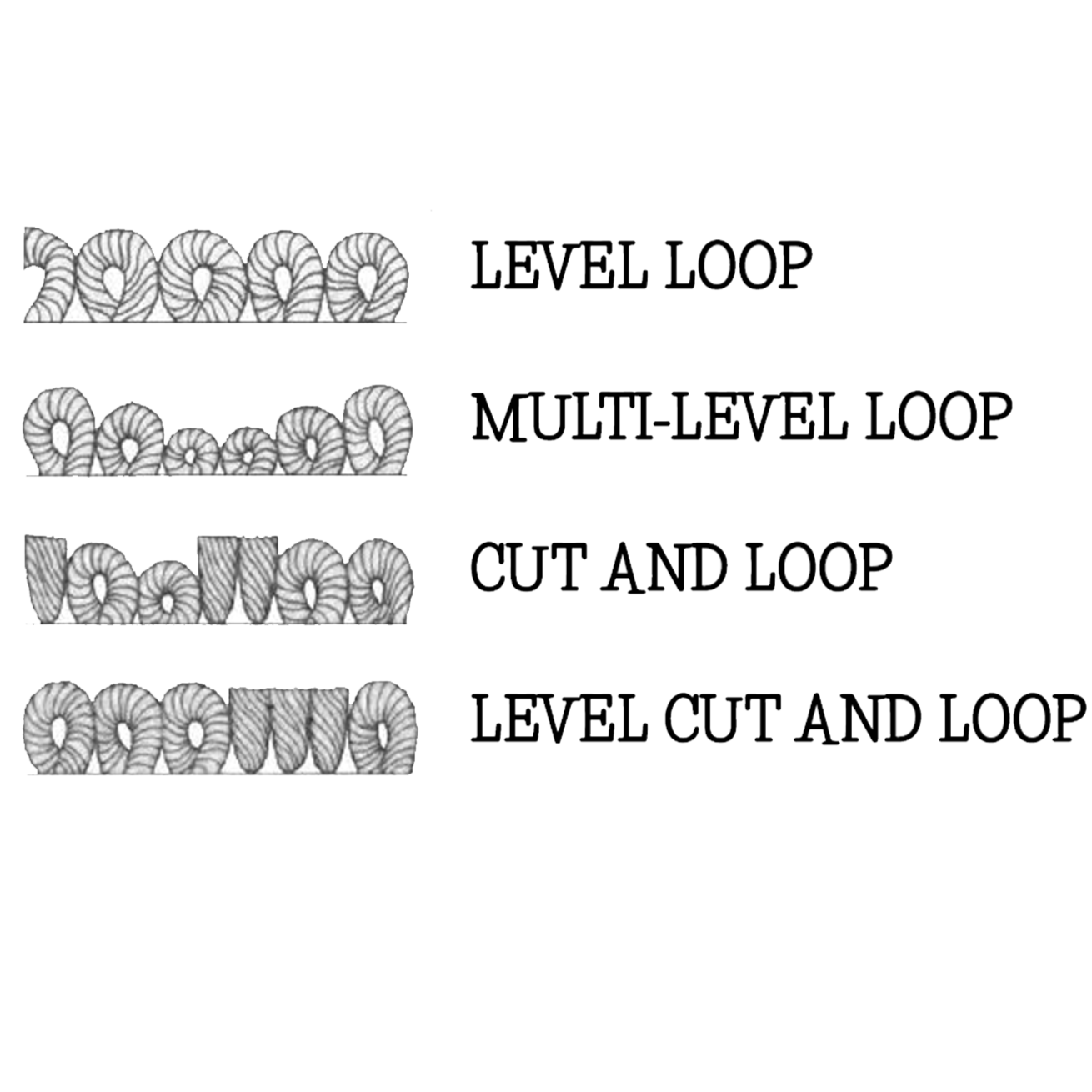
Loop pile means the carpet fibres stay looped instead of being cut. This usually gives the carpet a more textured finish and can make it more forgiving in busy areas because it does not show footprints in the same way as a plush cut pile.
Level Loop Pile - Level loop pile has loops that are all the same height. It gives a neat, consistent texture and is often a practical choice for hallways, stairs, family rooms and other high-traffic areas.
It is usually durable and good at hiding footprints, but it can feel firmer underfoot than cut pile carpet.
Multi-Level Loop Pile - Multi-level loop pile is similar to textured loop, but the difference between the loop heights is often more noticeable. It can create a more defined pattern or sculpted effect.
Cut and Loop - Cut-and-loop carpet combines cut fibres with looped fibres to create pattern and texture. It can be useful in living rooms, bedrooms and spaces where you want subtle movement underfoot. The pattern can date, and the looped sections may not be ideal for pets with claws.
Textured Loop Pile - Textured loop pile uses loops of different heights to create more movement and texture. It can look more interesting than a flat level loop and can help disguise everyday wear.
It works well in living areas, bedrooms, hallways and family spaces where you want texture without a strong pattern.
It can add depth to a room, but stronger patterns may date faster or become harder to work with if the rest of the room changes.
Colour Matters More Than People Think, it changes the whole feeling of a room.
Light colours can make a room feel softer and more open, but they are less forgiving.
Mid-tones are often the most practical because they hide everyday marks better.
Darker carpets can feel grounding and luxurious, but they may show lint, dust or pet hair depending on the colour.
Warm tones can make a space feel more inviting. Cooler tones can feel calmer and quieter. Flecked or heathered carpets can be more forgiving than one flat colour.
Always test samples in the actual room. Look at them in morning light, afternoon light and artificial light. A carpet that looks warm in a showroom can look grey, yellow or flat at home.
Don’t Forget The Underlay - It’s The Part You Don’t See, But Definitely Feel
Underlay is one of the most important parts of a carpet installation, even though it disappears completely once the carpet is laid. It affects how soft the carpet feels underfoot, how well it wears over time, how much noise is absorbed, and even how warm the room feels.
A good-quality underlay provides the carpet with support, helping it bounce back from foot traffic and furniture pressure. Without the right underlay, even a beautiful carpet can feel flat, wear unevenly, or lose some of its comfort much faster than it should.
It also plays a big role in insulation. In bedrooms, living rooms and family spaces, underlay can help soften sound and add warmth, making the room feel calmer and more comfortable. This is especially useful in homes with timber subfloors, upstairs rooms, open-plan areas, or busy family living spaces.
The best underlay depends on the carpet type, the room, and how the space is used. A hallway or stairwell may need something firmer and more durable, while a bedroom can usually take a softer, more luxurious option. Like the carpet itself, underlay should be selected with both comfort and performance in mind. Dunlop Underlay, Airstep Underlay, Everquiet Underlay

How to Choose the Perfect Carpet for Your Home - The Hue And Space Take
The best carpet is not the most expensive one. It is the one that suits the room, the people, the light, the furniture, the floor plan and the way the home is lived in.
In low-traffic areas like primary bedrooms and guest rooms, softer, more luxurious carpets are appropriate. These areas allow for plush, delicate textures that offer comfort and aesthetic appeal without compromising on heavy foot traffic. You could choose premium wool or a wool blend, soft, durable solution-dyed nylon, or high-performing triexta fibre.
For high-traffic areas like hallways, living rooms and stairs, opt for durable carpets. These areas need robust carpets that can withstand constant wear and tear while maintaining their appearance. You could choose a low-profile, high-density Solution-Dyed Nylon (SDN) or a high-quality Wool carpet in a level loop or tight twist pile construction
For families with children or pets, durable carpets in darker tones will handle spills and pet activities better. Kids and pets can be hard on carpets, so selecting a resilient option is key. You could choose Triexta or Solution-Dyed Nylon (SDN).
Good design is not about choosing the “best” material in theory. It is about choosing the right material for the right space.
That is where carpet becomes more than flooring. It becomes part of the comfort, function, flow, feeling and finish of the home.
We can help you to find the perfect bedroom carpet to suit any style and budget.