Complete Interior Design - ideas to installation
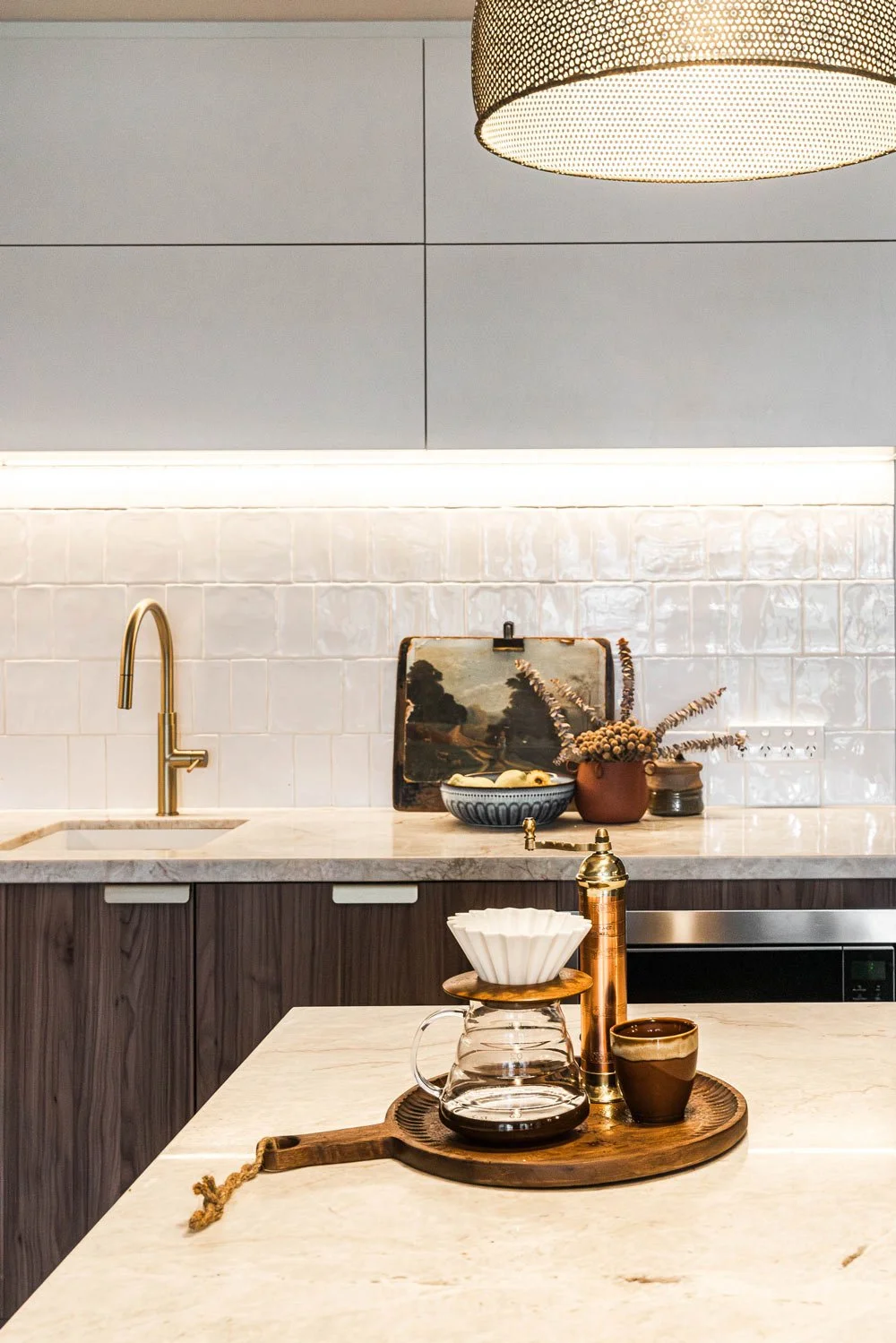
Hue & Space creates considered interiors that are designed around the way you live.
We look at your home as a whole — its layout, flow, furniture, finishes, lighting, and functionality — then bring those elements together into one clear, cohesive design direction.
From early planning through selections, purchasing, and installation, we make the design decisions, resolve the details, and lead the process so your home feels intentional, individual, and complete.
How we help you get it right…
Good interior design starts well before choosing furniture or paint colours.
We consider how you move through your home, how rooms connect, where furniture should sit, what needs to be stored, how natural light affects the space and where opportunities may be hiding within the existing layout.
From there, we develop the complete design direction — layouts, colours, materials, finishes, furniture, lighting and decorative elements — so every decision works together.
Most people think interior design is about choosing furniture and colours.
It’s not.
We fix homes that don’t function properly.
Our Core Interior Design Services
How It All Fits Together
Every great interior starts with the layout.
We begin by understanding how you live, then resolve your floor plan, space planning, and zoning before moving into finishes, materials, and styling.
Because when the layout works:
Your home feels bigger
Your furniture fits properly
Your storage makes sense
and everything flows naturally
This approach removes guesswork, reduces costly changes, and creates a home that feels right from the start.
Ready to Start?
Not sure what you need? That’s completely normal.
Start with an In-Home Consultation
On-site advice with clear, practical direction for your layout and next steps.
Book an In-Home Consultation → /in-home-consultation
Why Hue & Space
We don’t just design how your home looks; we design how it works.
Our approach combines technical space planning with real-life functionality, so your home supports your routines, your lifestyle, and the way you actually live.
-
For clients who want a fully resolved interior, we can manage the design from initial planning through to final selections and installation.
This may include space planning, furniture layouts, colour and material schemes, lighting, window treatments, furniture and furnishings, custom elements, artwork, styling and procurement.
The result is one cohesive design rather than a series of disconnected decisions.
-
Your floor plan determines how well your home will work long before the finishes are chosen.
We assess light, window placement, and orientation to improve comfort, usability, and energy efficiency.
You don’t realise how much light impacts a space until you’re stuck with a dark living area or overheating rooms.We improve how your home connects to outdoor spaces making it feel bigger, more usable, and better to live in.
Often overlooked yet it’s one of the biggest missed opportunities in most home designs.We review proposed or existing layouts to assess circulation, zoning, privacy, furniture placement, storage and the relationship between spaces.
We identify opportunities, potential problems and practical improvements before you commit to expensive building work.
We define clear zones for living, working, and storage so your home supports how you actually live.
When spaces aren’t clearly defined, everything overlaps and clutter builds fast.SPACE PLANNING & FURNITURE LAYOUT
The right layout can completely change the way a room functions.
We consider furniture size, placement, circulation, sightlines and how spaces connect so rooms feel balanced, practical and comfortable to live in.
Rather than simply fitting furniture into the available space, we design the room around how it needs to be used.
-
We test your space against real furniture sizes so everything fits, flows, and functions.
This is where most layouts fail, furniture either doesn’t fit, or it disrupts how you move through the room.Fix My Layout → /furniture-layouts
-
Once the layout is resolved, we develop the overall design direction for your home.
This brings together colour, materials, finishes, furniture, lighting, window treatments and key design details into a clear visual concept.
You receive a considered direction that gives the project consistency and makes the next decisions much easier.
COLOUR, MATERIALS & FINISHES
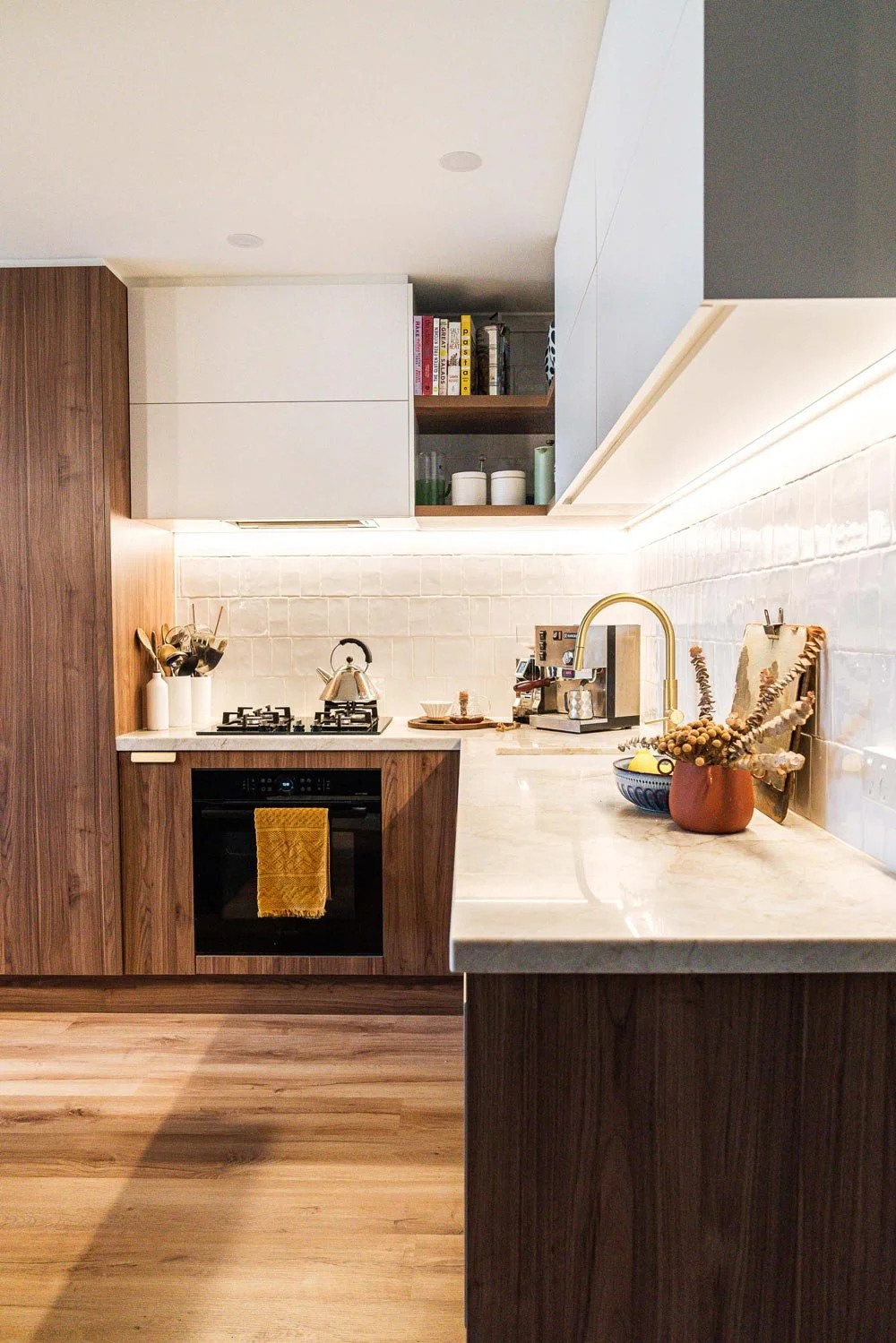
We develop cohesive palettes that respond to the architecture of your home, its natural light, scale and the way you want the space to feel.
This may include paint colours, flooring, cabinetry finishes, stone, tiles, fabrics, metals and other materials.
Each selection is considered as part of the wider design so the home feels connected rather than pieced together room by room.
-
Once the design direction is resolved, we help bring it to life.
We can select and specify furniture, lighting, rugs, window treatments, artwork, finishes and decorative pieces, then manage purchasing, supplier coordination, deliveries and installation.
Each element is considered in relation to the whole interior so the final result feels cohesive, resolved and complete.
CUSTOM FURNITURE & SPECIALIST PIECES
Where a room needs something more specific, we can work with suppliers, makers and trades on custom furniture, upholstery, window treatments, cabinetry, lighting and other specialist pieces.
We help define the design, proportions, finishes and specifications so each element feels integrated into the overall interior.